Blog
AI in Construction: Why SMEs Need to Stay Curious Without Getting Carried Away
Robert Lomax , Managing Director of LRL Roofing Solutions, on what the construction industry is getting wrong about AI, why discipline matters more than pace, and what sensible adoption looks like for an SME working with main contractors and building owners.
AI is no longer a distant conversation for the construction industry. It is here, it is moving quickly, and whether businesses feel ready for it or not, it is already changing how people think about information, productivity, safety, reporting and decision-making.
For many SMEs, that creates a difficult tension. On one hand, there is a fear of being left behind. On the other, there is a real risk of investing too early, too heavily, or in the wrong direction.
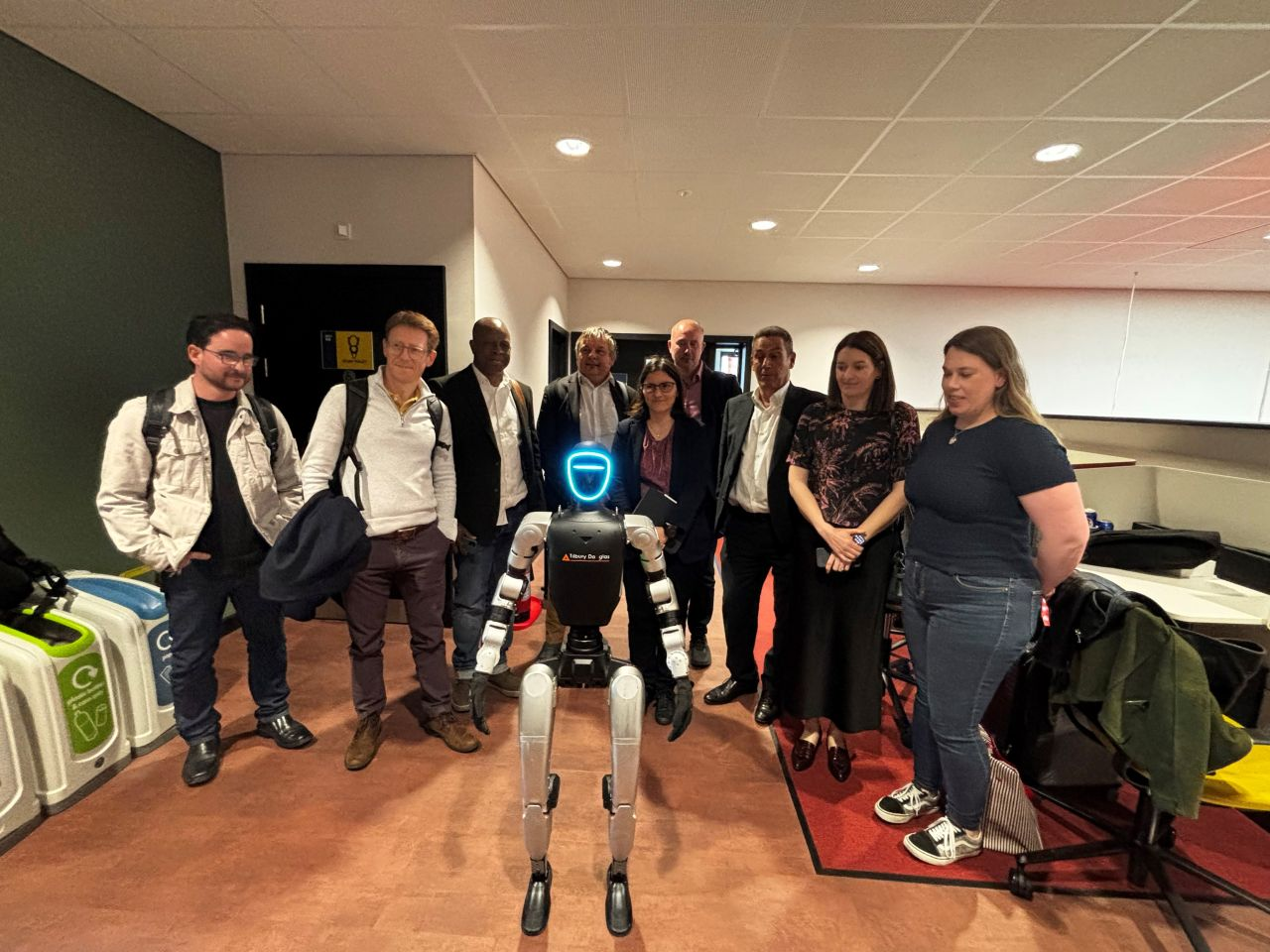
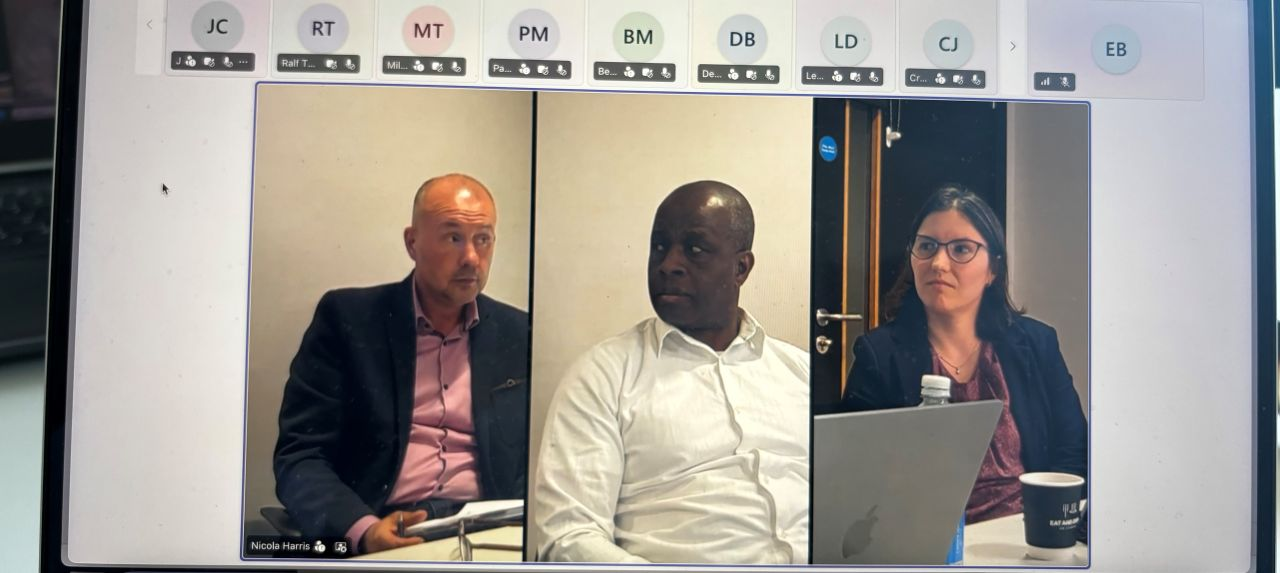
That tension was one of the main themes at a recent Constructing Excellence roundtable on AI in construction, attended by Robert Lomax, Managing Director of LRL Roofing Solutions. Robert was one of the few specialist subcontractors in the room. He was not there to represent roofing in isolation. He was there as the leader of a typical construction SME: a business turning over around £15 million, with a core team directly employed and close to 100 people working under its banner, operating in the day-to-day reality of tenders, programmes, site delivery, safety requirements and commercial pressure.
That matters, because AI is often discussed as if it belongs to the biggest organisations first. The roundtable challenged that idea. AI is not just a tier one contractor issue. It is an SME issue too. But SMEs need to approach it with discipline.
From fear of missing out to better understanding
Robert is open about where LRL was six months ago. The business had taken on some expensive subscriptions, drawn in by the marketing. Like many business leaders, he felt the pressure to act. There was a sense that AI was moving so quickly that doing nothing might mean falling behind. That fear is understandable. The investment behind AI is enormous, and the pace of development is hard to ignore.
His position has shifted. The biggest lesson has not been to move faster. It has been almost the opposite. Some of the tools that would have cost a business tens of thousands of pounds a few months ago are now being matched by widely available platforms. The market is changing too quickly for an SME to lock itself into a 54-month contract on the strength of a sales pitch.
That does not mean waiting passively. It means learning actively. Experimenting in small ways. Asking better questions. Building internal understanding before making major decisions.
AI will not fix poor foundations
One of the strongest themes from the roundtable was the importance of getting the basics right. AI is only as useful as the information it works with. If files are not saved consistently, documents sit in the wrong place, teams use different systems, and business data lacks structure, AI will not remove the problem. It will simply expose it in a new way.
Construction already struggles with fragmented information. Drawings, specifications, RFIs, photographs, meeting notes, reports, tenders and revisions all move through projects at speed. If that information is inconsistent, badly stored or poorly labelled, no tool can fully compensate.
For SMEs, this is one of the most practical starting points. Before asking what AI can automate, it is worth asking some simpler questions. Where is our information? Can people find it? Is it consistent? Is it reliable? Is it stored in a way that helps the business and the people we work with? That work is not glamorous, but it is essential. A business chasing advanced AI outcomes without basic data discipline is starting in the wrong place.
The real opportunity is not the shiny technology
There were examples at the event of technology that would have sounded futuristic only a few years ago. Robots capable of walking around sites. Systems that capture 360-degree imagery. Tools that identify hazards, produce reports and reduce repetitive site administration. The striking part was not just what the technology could do. It was how accessible some of it is becoming. The humanoid robot showcased on the day is available for somewhere in the region of £15,000 to £20,000.
For Robert, the more interesting question is not whether a robot looks impressive. It is what practical problem it solves. On any site, contracts managers and site managers spend significant time walking projects, checking progress, identifying risks and writing reports. If technology can take on part of that repetitive process, it creates space for people to focus on the work that needs judgement, communication and experience.
For LRL, one obvious example is fire watch after hot works. Roofing work often involves a period of monitoring once hot works are complete to make sure nothing is smouldering or developing into a fire risk. Most of the time, nothing happens. But that does not make the process unimportant. A person can become tired or distracted on a long watch. A properly designed monitoring system does not have that problem. That is a practical use case. It is not technology for the sake of it. It is a clear safety task where the right tool could support the right outcome — and let the human go home at a sensible hour.
The danger of letting the tool create the work
Robert also shared a more personal example. After a directors’ meeting, he needed to write up three actions. In normal circumstances, that would have been a fifteen-minute job. Because the meeting had been recorded and transcribed, he started using AI to summarise it, format it and turn it into a polished document. Several hours later, he had something far more detailed than he originally needed. The task had not become more valuable. It had just become bigger.
That is one of the most important lessons for any business exploring AI. Technology can make work look more sophisticated without making it more useful. A fifteen-minute task can become a half-day exercise if the tool starts leading the process.
The same risk applies across construction. A report can become longer without becoming clearer. A tender response can become more polished without becoming more accurate. A workflow can become more automated without becoming better controlled. The question has to remain simple. What are we trying to improve? If the answer is not clear, the business is being led by the technology rather than the other way around.
AI as a personal assistant, not a decision-maker
At this stage, LRL is not using AI to automate major workflows across the business. The business is still in an exploratory phase, and that is deliberate.
The current value is in using AI as a form of personal assistant. Capturing meeting transcripts. Summarising long conversations. Helping structure thinking. Turning scattered discussion into something more usable. This article is an example of that. The original interview with Robert was conducted by voice, transcribed, summarised and developed into a written piece. AI supported the process. It did not replace the thinking. The views are Robert’s. The examples are Robert’s. The judgement still sits with the people reviewing and shaping the final article.
That distinction matters. AI is good at processing large amounts of information. It can find patterns, summarise material and help organise thoughts. But it does not understand a business in the same way a person does. It does not carry responsibility. It does not understand the consequences of a poor decision on site, or the difference between something that sounds right and something that will actually work for a client. In construction, that distinction is not academic. It is the difference between a building that performs and one that does not.
Guardrails come before adoption
Any business using AI needs clear rules. Robert’s position on data is straightforward. Do not put anything into a free AI tool that you would not be comfortable making public. That includes personal information, commercial data, salaries, tender details, client information and anything confidential.
Paid tools and enterprise platforms can offer stronger assurances, particularly where they sit within systems a business already uses. But even then, businesses need to understand what is being shared, where it is going, and what protections are in place. This is not just an IT concern. It is a commercial concern, a GDPR concern, and a trust concern. Main contractors and building owners have a reasonable expectation that the people working on their projects treat their information with care.
Beyond data, there is the question of human oversight. AI can produce content that looks authoritative but is wrong. Every piece of content, every client-facing output, and every decision of consequence needs a human being to review it.
And finally, there is the value of sharing what works. One of the more practical things LRL has done is set up an internal group where people share what they have tried, what has saved time, and what has turned into a distraction. Without that, the same experiments get repeated, and the lessons are lost.
The next skills gap is already appearing
Another major theme from the roundtable was skills. The University of Salford presented plans for an Artificial Intelligence and Automation apprenticeship designed to fill a gap in the market. That gap sits between basic AI users and highly technical specialists.
Construction does not only need data scientists. It also needs people inside businesses who understand operations, workflows, documents, risk, clients and project delivery well enough to spot where AI can actually help. The most useful opportunities will not always be obvious to external software providers. They will sit inside the small frustrations of daily work. The repeated admin task. The tender review bottleneck. The duplicated reporting process. The information that is always difficult to find. The manual check that absorbs hours every week.
People already inside the business are often best placed to identify those problems. They just need enough knowledge and confidence to turn them into practical use cases. For SMEs, that is encouraging. AI adoption does not have to start with hiring a specialist team. It can start with upskilling the people who already understand the business.
Not everything needs to be automated
There is a bigger human question sitting underneath all of this. If AI and automation remove more tasks, what are people left with?
Robert is cautious about the idea that the goal is simply to automate everything. He uses a simple example from home. A robot mower could cut his grass. It would save time. It might even make financial sense. But he has not bought one. There is something useful in doing practical work. There is satisfaction in it. There is space to think. There is a sense of progress that comes from completing something visible and tangible.
The same principle applies in business. Some tasks are repetitive and add very little value. Those are obvious candidates for improvement. But not every task is waste just because it takes time. Some site visits build understanding. Some conversations build trust. Some manual reviews reveal issues that would otherwise be missed. The future is not about removing people from the process wherever possible. It is about being more thoughtful about where people add the most value.
The environmental question cannot be ignored
The roundtable also raised a point that is not discussed enough: the environmental cost of AI. AI tools need processing power. Processing power needs energy. Data centres need cooling. The infrastructure behind every prompt, image, summary or automated process has a physical footprint.
That does not mean businesses should avoid AI altogether. But it does mean the industry needs a more balanced conversation. Construction is already under pressure to reduce waste, improve sustainability and make better long-term decisions for the buildings we hand over. It makes little sense to adopt AI casually while ignoring the resource demands behind it. The answer, again, is not fear. It is discipline. Use AI where it adds real value. Avoid using it where it simply creates noise.
What sensible AI adoption looks like for construction SMEs
For Robert, the way forward is practical, and it follows the same logic LRL applies to a roofing package on a live building. Understand the problem first. Plan around the people affected. Do not make claims you cannot support.
First, put guardrails in place. Make sure people understand what they can and cannot put into AI tools. Protect client information, commercial data and personal details.
Second, encourage exploration. People need to test tools, learn what works, and share useful examples internally.
Third, focus on workflows. Look for the parts of the business that are repetitive, time-consuming, low-value, or prone to inconsistency. Reporting, scheduling, document handling and information retrieval are usually a good place to start.
Fourth, avoid rushing into expensive commitments. The market is changing too fast to assume that today’s impressive product will still be the best answer in twelve months.
Finally, keep humans in the loop. AI can support recommendations, summaries, analysis and routine workflows. But important decisions still need human judgement, particularly where safety, quality, cost and client relationships are involved.
That approach is consistent with how LRL thinks about its own work for main contractors and building owners. Our role is not just to install flat roofs. It is to help clients inspect roofs, understand problems, recommend the right system, install safely, maintain performance and plan for the future. That requires practical judgement, technical knowledge and clear communication. AI does not replace any of that. Used well, it supports it.
The business still has to lead
AI in construction is not a passing trend. The investment behind it is too large. The pace of change is too fast. The potential applications are too useful to ignore. But SMEs do not need to respond with panic. They need to respond with curiosity, discipline and common sense.
The businesses that benefit most will not necessarily be the ones that buy the most advanced tools first. They will be the ones that understand their own problems clearly. They will have better information habits. They will train people who understand both the technology and the business. They will use AI to reduce friction, improve decisions and support delivery. And they will know when not to use it.
For our clients — the main contractors who appoint us on packages where performance and programme matter, and the estates and facilities teams who rely on us to keep buildings dry, safe and operational — the value we provide does not change because the technology is changing. We are still the people who specify carefully, install safely, communicate clearly and stand behind the work. AI may make some of that easier over time. It does not change the responsibility behind it.
The technology can move quickly. The business still needs to lead.
—
This article was produced from a voice note interview with Robert Lomax, converted to transcript and shaped with the assistance of AI — itself a small example of how we are already putting these tools to work, with a human reviewing every word.

What our customers say